Skip to Main Content
  • MyChart
  • Pay a Bill
  • Help
St. Luke’s Logo to Homepage
  1. Home
  2. Healthier Communities
  3. Health & Safety Initiatives
  4. Children’s Injury Prevention
  5. Water Safety
  1. Children’s Injury PreventionChildren’s Injury Prevention
Young girl on a boat wearing life jacket

Water Safety

Young girl on a boat wearing life jacket

Water Safety

Splash Smart This Summer

As warmer weather draws families to pools, rivers, and lakes, time on the water becomes part of summer fun. Swimming and water play can be joyful experiences when safety comes first. While drowning remains a leading cause of unintentional injury death for children under 14, the good news is that simple steps, like planning ahead, staying attentive, and setting clear expectations, can help you and your family enjoy the water safely.


Group of pre-teens playing on a dock

Attention is the Best Protection

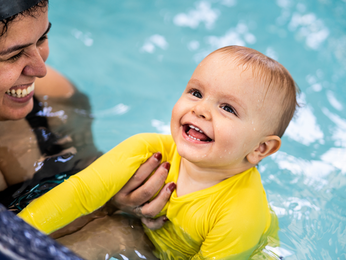
  • Mom and baby swimming
    PRIORITIZE SWIM LESSONS

    Build Water Skills

    When your child is ready, swimming lessons can be an important step in building water confidence, with many experts recommending a start around age one.

    No matter their skill level, adult supervision is always essential when kids are in the water.
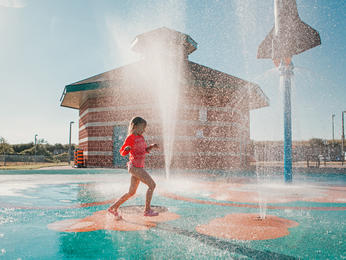
  • Young girl running through splash pad
    PAY ATTENTION

    Assign a “Water Watcher”

    When multiple adults are present, choose a designated Water Watcher. This person focuses solely on supervising the water for a set time, such as 15 minutes, before switching with another adult.
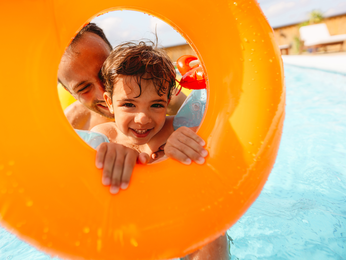
  • Father and Son playing in a pool
    STAY CLOSE

    Be Within Arm’s Reach

    Drowning can happen quickly and quietly, even in shallow water. Keep infants and toddlers within arm’s reach at all times, often called “touch supervision,” to ensure they’re never out of reach.

little boy wearing life jacket on a dock

Essential Water Safety Gear

Life Jackets Save Lives

Life jackets reduce the risk of drowning for people of all ages and swimming abilities. In Idaho, children 14 and under are required by law to wear a U.S. Coast Guard-approved life jacket when riding on most small boats, including canoes, kayaks, rafts, and motorboats. Always choose a properly fitted, Coast Guard-approved life jacket when spending time in or around open water.


Swimming aids such as water wings, puddle jumpers, and inflatables are not safety devices and should never replace close supervision or a life jacket.


A properly fitted life jacket should feel snug without restricting movement. To check the fit, have your child raise both arms straight up—if the jacket moves up toward the chin or ears, it may be too large or the straps too loose. Infants should not be on any type of boat until they meet the minimum weight requirement for an approved life jacket.

 

Understanding Drowning Risk in Idaho

Safety Tips

Idaho has one of the highest rates of accidental drownings in the nation due to our abundant natural water sources, like rivers and lakes, as well as our agricultural support waterways.

Review this video for tips on keeping your children safe around water. 

1/1
Young girl wearing life jacket sitting on a boat.

Boating Safety

Share Basic Boat Rules

Before heading out, review basic boat safety rules and make sure everyone understands them. This includes wearing life jackets at all times, keeping hands and feet inside the boat, and avoiding running or rough play—especially for children.

According to the U.S. Coast Guard, babies should not ride on boats—including rowboats, kayaks, motorboats, or sailboats—until they meet the minimum weight requirement for an approved life jacket.
Alcohol is a contributing factor in many boating accidents, involving both operators and passengers.

For everyone’s safety, we strongly recommend avoiding alcohol while boating.

Enjoying Idaho’s Lakes and Rivers

Open water has unique conditions you won’t find in a pool. Understanding those differences can help everyone enjoy a safer day in the sun.
  • Expect Inconsistency

    Be cautious of sudden drop offs, uneven surfaces, strong currents or undertow. 

  • Find Swimming Areas

    Choose designated swim areas whenever possible. 

  • Proceed Feet First

    Never dive into natural bodies of water. They may look serene, but often hold hidden underwater hazards.

  • Watch the Weather

    Weather can be unpredictable and change quickly. Always have a plan for strong winds, storms, lightning and flash flood conditions. 

Little girl wrapped in a pink towel

Temperature Safety

Keep Kids Comfortable and Hydrated

Infants and young children can lose body heat quickly, so if they become cold or start shivering, wrap them in a dry towel or blanket to warm them up.

In hot weather, help keep kids cool by providing shade or a fan, and encourage frequent fluid intake to prevent overheating or dehydration.

Learn CPR

CPR can save a life in the critical minutes before emergency responders arrive. Organizations like the American Red Cross and American Heart Association offer online and in‑person training options. You may also find CPR and First Aid classes at your nearest St. Luke’s location.

Connect With Your Local Injury Prevention Team

  • Treasure Valley

    [email protected]

  • Magic Valley

    [email protected]

Illustration of a fish in the river.
St. Luke’s Homepage

About St. Luke’s

Who We Are
News
Careers

Team Resources

For Providers
For Employees
For Contractors

Patient Resources

Financial Assistance
Mental Health Support
Medical Records
Patient Rights & Responsibilities

Essential Information

Accessibility
Price Transparency
En Español

Quick Links

Contact Us
St. Luke’s FitOne
St. Luke’s Health Partners
St. Luke’s Health Plan

DisclaimerNon-Discrimination/EEOPrivacy PracticesTerms of Use
© 2026 St. Luke’s Health System. All rights reserved.
FacebookLinkedinYoutubeInstagram