News & Announcements
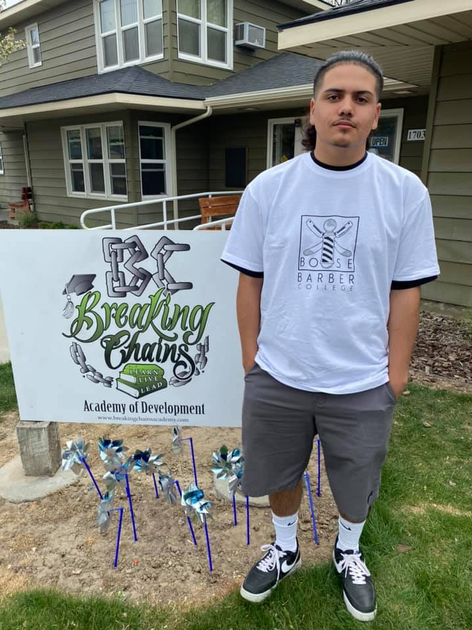
Breaking Chains Academy of Development helping teens with the support of St. Luke’s

Breaking Chains Academy of Development executive director Luis Granados, far right, gives a lesson on how to tie a tie.
By Alexis BennettLast Updated November 13, 2023
“I’ve been everywhere, and nothing is working.”
According to Luis Granados, executive director of Breaking Chains Academy of Development (BCAD), that is what nearly every young person says the first time they meet.
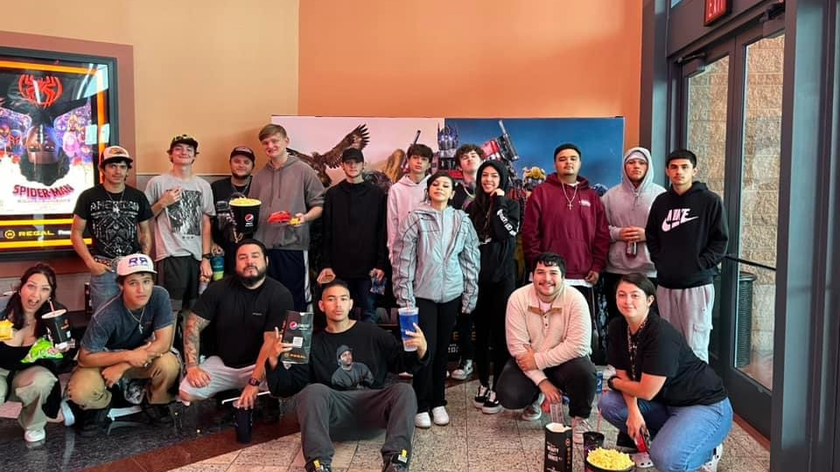
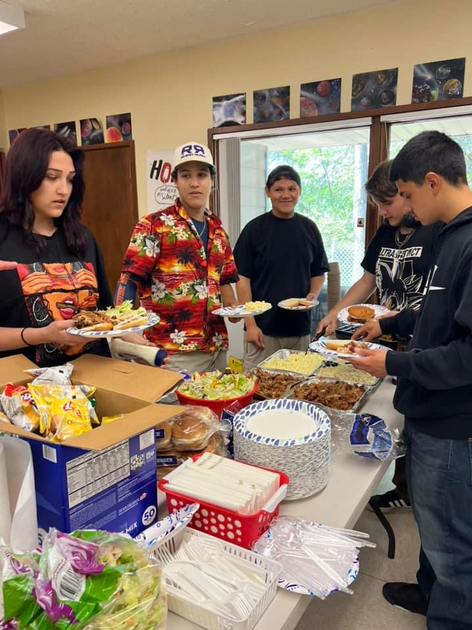
The Nampa-based nonprofit and Community Health Improvement Fund (CHIF) grant recipient provides tutoring and General Education Development (GED) prep, mentorship, healthy foods and snacks, hygiene products and a safe place to relax and hang out for teens ages 13 to 18, primarily from Canyon County.
Many students come to the program from juvenile corrections but others are referred by their school or a friend in the community worried about academic performance and behavioral and social challenges.
“When you see these kids displaying antisocial behaviors, it’s due to a root cause,” Granados said.
The cause often is from trauma both inside and outside the home.
ACEs, or adverse childhood experiences, are events or living conditions that children encounter that cause trauma. Typically abusive, ACEs can range from physical or mental violence, neglect or serious household dysfunction to more common challenges such as divorce or mental illness. It can also occur at the community level as discrimination, poor housing and violence or gang activity.
While most people experience at least one ACE, multiple ACEs are associated with an increased risk of mental, emotional and physical conditions and disease.
“These kids are showing up with high, through-the-roof ACE scores,” said Granados. “If those don’t get addressed, they can have serious long-term effects.”
Six or more ACEs become predictive of and, if unmitigated, are associated with at least five of the top 10 leading causes of death. A person with just four or more ACEs, as determined by a simple screening, had a four-to-12-time increase in health risks for alcoholism, drug abuse, depression and suicide rates. They also tend to experience higher rates of tobacco use, increased likelihood of obesity and more prevalence of diseases such as heart disease, cancer and chronic lung disease.
As these experiences go unaddressed, a cycle emerges. These students can become adults who are more likely to experience chronic physical and mental illness, increasing the cost of care for themselves, their families and providers and reducing the overall health and wellness of the community. They’re also more likely to perpetuate adverse experiences through their own parenting practices and lifestyle choices.
“That’s why we’re named Breaking Chains Academy because it’s all about breaking traumas,” Granados said.
Positivity builds resiliency
Understanding that building resilience through positive childhood experiences (PCEs) is the best mitigator of ACEs and their associated negative health outcomes, St. Luke’s provides financial resources to programs and organizations, like Breaking Chains, that address upstream determinants of health.