Community Health & Engagement
Air St. Luke’s partners with Colorado team for avalanche rescue training in Wood River Valley

By Joy PrudekLast Updated March 23, 2026
Few professional development days are like ones recently held in the Wood River Valley.
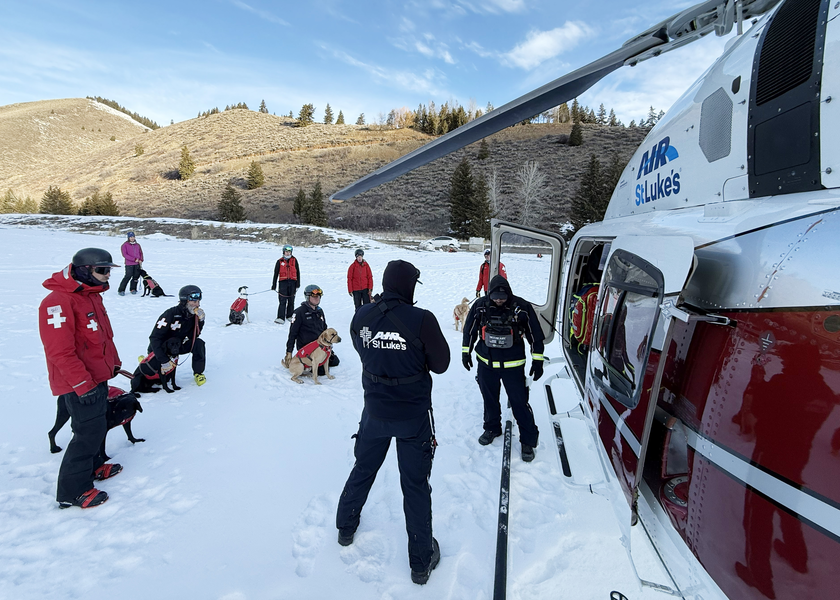
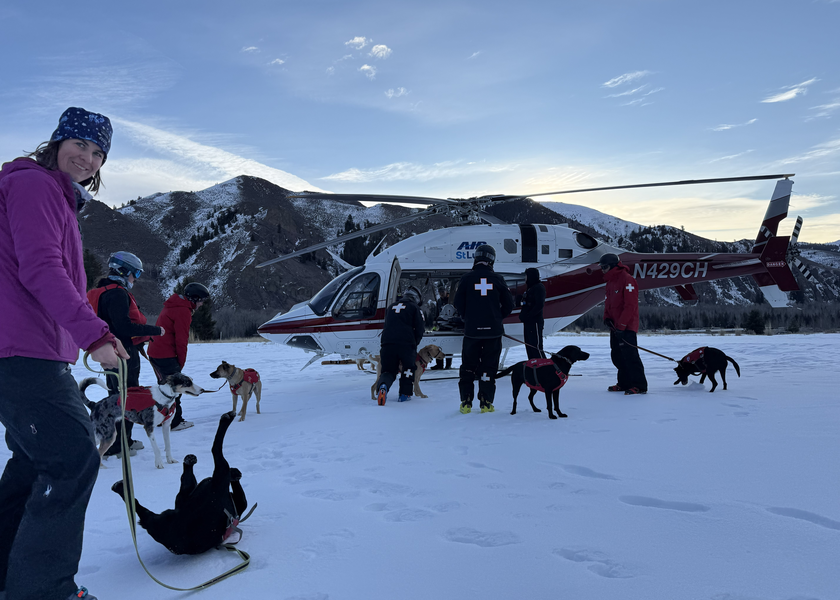
Helicopters, dogs and some out-of-state compatriots were on hand for a multi-day specialized avalanche search and rescue training school.
The training brought together 24 avalanche dog teams from across the western United States, including all four Sun Valley teams, focused on locating people buried under snow. Colorado Rapid Avalanche Deployment partnered with Air St. Luke’s crews that provided helicopter support, giving teams the opportunity to train in realistic scenarios that reflect how avalanche rescues often unfold in the real world.
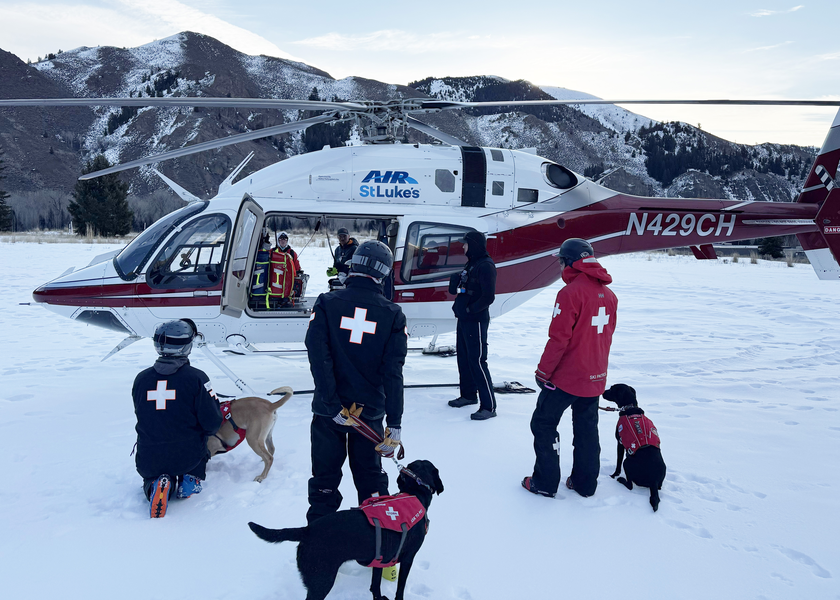
Air St. Luke’s partnered with Colorado Rapid Avalanche Deployment for a multi-day training opportunity in the Wood River Valley.
Preparing for complex rescue environments
Avalanche search and rescue is an incredibly challenging emergency response environment, often involving steep terrain, remote locations and rapidly changing conditions. Helicopters are a commonly used resource in these rescues — but only when responders are trained to work safely and effectively around them.
As part of the event, Air St. Luke’s supported training that allowed dog teams and handlers to practice helicopter transport, including the added complexity of moving working K9s. This type of experience is not always available during routine training but is critical for real-world readiness.
“Helicopters are a commonly used asset in many rescue situations and it’s important to have that experience and training before the actual emergency event,” said Blaine Patterson, EMS director for Air St. Luke’s. “This training gives teams exposure to something they may rely on when the stakes are very high.”
Avalanche dogs are trained to locate human scent beneath snow, alerting handlers when they detect a buried person. Training during the C-RAD school focused on reinforcing these skills through repeated searches, including burying “quarries,” or human scent sources, and introducing variables commonly seen in real avalanche scenes.
“The public often sees the helicopter and the dogs and thinks about the excitement, but what they don’t see are the countless hours of training that go into this work,” said Ryan Parnes, an Air St. Luke’s flight nurse. “There’s a lot of planning, a lot of people involved and a tremendous amount of trust between a dog and handler. It really takes a village.”