News & Announcements
St. Luke’s, Idaho organizations identify most pressing community health needs in region of more than 1 million people

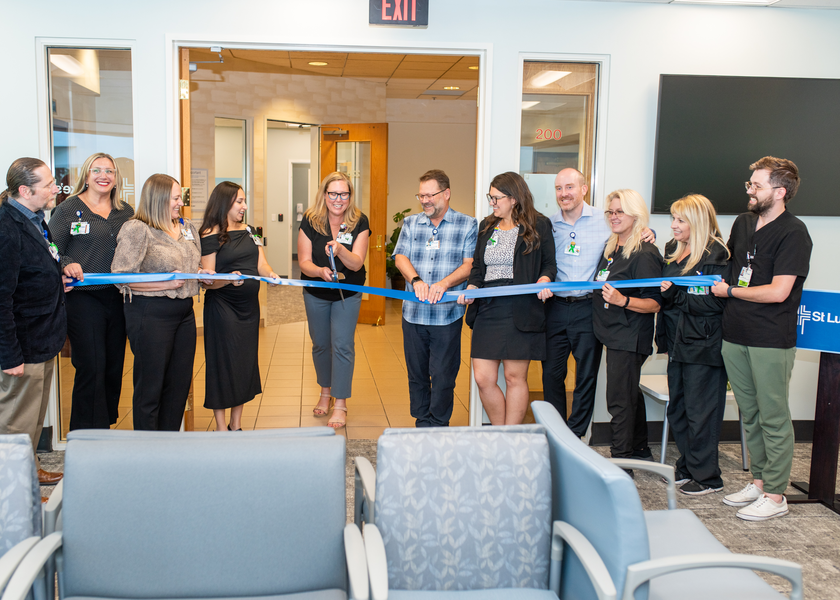
Members of the St. Luke’s Community Health and Engagement team gathered at a recent Community Health Improvement Fund celebration. Their work as part of the CHNA collaboration has addressed the most pressing health needs in our communities.
By Dave SouthornLast Updated July 21, 2026
Joint Community Health Needs Assessments recently released covering 13 Idaho counties and more than 1 million people found the most pressing health needs to be behavioral health, the lack of affordable housing and access to care.
The 2026 Community Health Needs Assessment conducted by the Western Idaho Community Health Collaborative is a regional partnership with organizations like St. Luke’s Health System, Central District Health, Saint Alphonsus Health System, Southwest District Health and United Way of Treasure Valley. In the Magic Valley and Wood River areas, St. Luke’s partnered with South Central Public Health District and Family Health Services.
The 13 counties assessed included Ada, Elmore, Boise, Valley, Adams, Canyon, Gem, Owyhee, Payette, and Washington in the greater Treasure Valley. Blaine, Jerome and Twin Falls were covered in the Wood River and Magic Valley reports. CHNA reporting is required every three years, per the IRS.
“When we take the time to listen to our community and pair those insights with data, we make better decisions,” said Megan Remaley, president and CEO, United Way of Treasure Valley. “The Community Health Needs Assessment gives us a clearer understanding of where needs exist, where gaps remain, and which solutions are most likely to improve outcomes for our community.”
In 2023, in the previous CHNA report, the same three key needs were identified to be the most pressing.
Priority actions that have been taken by the WICHC as a result of the collaborative assessments include advancing housing stability as a health priority, advocating for transformational housing funding, supporting data-informed housing investments, strengthening behavioral health access and outcomes, expanding stigma reduction resources, promoting behavioral health trainings and assessing and advocating for behavioral health workforce needs.
At St. Luke’s, those three key issues are addressed daily in multiple ways.
Behavioral health: Focusing on upstream, comprehensive, community-based suicide prevention, reducing access to lethal means and supporting substance use disorder services.
Housing: Includes addressing and preventing homelessness, increasing affordable and workforce housing and supporting services that assist people in remaining stably housed and/or age in place.
Access to care: Facilitating transportation to and from facilities, proving mobile, telehealth and onsite services and improving resource navigation and connection to services.
Among the ways St. Luke’s has sought to improve behavioral health access has been the opening of the Myrtle Street clinic in Boise in 2025.
“The goal of this work is to listen carefully to our community and better understand the challenges people are facing,” said Sarah Seppa, director of community engagement at St. Luke’s Wood River. “Partnering with organizations that are deeply connected to the communities we serve helps ensure a more complete and representative picture of local health needs.”
The CHNA serves as the foundation for future community health improvement efforts. St. Luke’s will use these findings to develop implementation plans, working alongside community partners to focus on prevention, expand access to services and address social drivers of health.
“Since our first collaborative assessment in 2023, we’ve seen the value of working together to better understand and address community health needs,” said Angie Gribble, St. Luke’s senior director of Community Health and Engagement. “That partnership has strengthened both our insights and our impact.
“In 2026, we remain committed to this shared approach — continuing to strengthen partnerships, align resources, take action and ensure our work reflects the priorities and voices of the communities we serve.”
Implementation strategies will be developed and published by late 2026, with continued collaboration among health systems, public health agencies and community organizations.
If your business or organization would like to collaborate with St. Luke’s on helping to address a high priority health need, reach out to [email protected].
Learn more and read the full reports here.