Community Health & Engagement
Connecting care: How St. Luke’s teams are using focused data to address major Idaho issue

By Dave SouthornLast Updated March 18, 2026
Though Idaho has one of the lowest rates of breast cancer screenings in the nation, St. Luke’s teams are utilizing data to identify areas of greatest need in our communities.
According to the National Cancer Institute, only one state has a lower rate than the Gem State’s 65.3% of women 40 or older who have had a mammogram in the last two years.
The breast care services team at St. Luke’s has fought to address that not just in clinical spaces, but out in the community, too. Among those efforts is mobile breast health clinic units in the Treasure Valley and the newest, covering areas to the east including Elmore County and the Twin Falls area. St. Luke’s foundations in those areas raised $400,000 to get the unit rolling.
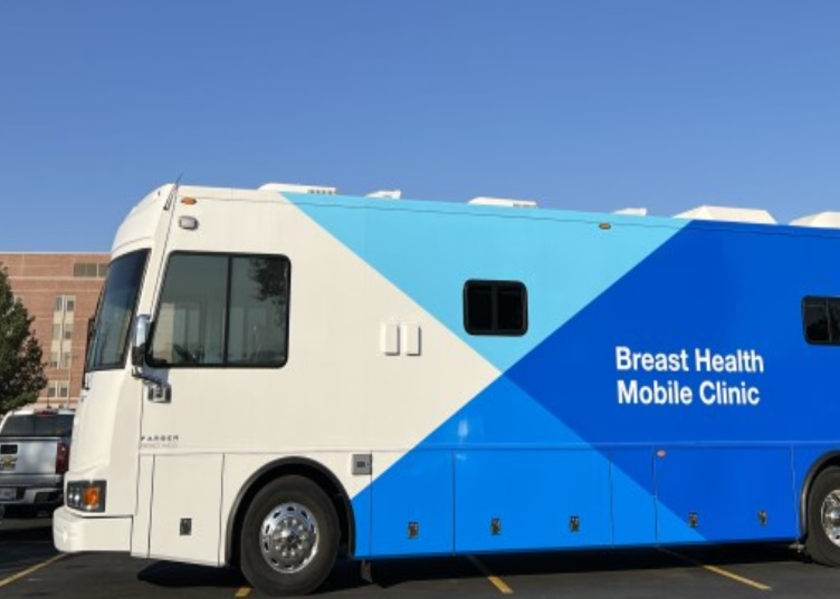
The mobile breast health clinic parked in Hagerman, a city of approximately 1,000 in Gooding County. Locating need in rural communities like it will help more patients get the right care, potentially saving lives through early detection.
Dr. Alejandro Necochea, a hospitalist and medical director of St. Luke’s Community Health and Engagement department, wanted to help those efforts.
“I’ve seen women come in for the first time and having stage IV cancer, even young women,” Necochea said. “I thought working closer with Breast Care Services, utilizing some of the data we have available to us, where are there gaps and how can we address that?”
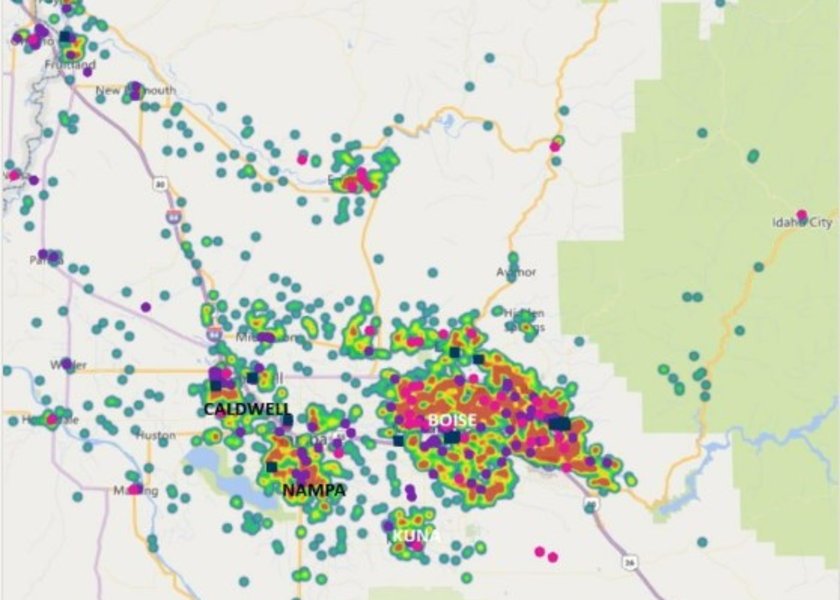
Simply put, using data compiled by St. Luke’s Health Partners, areas where women were overdue for mammograms can be pinpointed to street level. These places were put on a heat map, visually showing the need and potentially being able to change lives in those areas.
As an integrated health system, St. Luke’s is delivering care in a variety of settings, funding care through St. Luke’s Health Plan, and connecting patients and communities to the care they need.
St. Luke’s Health Partners engages with payers, such as government and insurance, taking accountability for the management of health populations. The value-based care arrangement is focused on prevention and the most cost-effective delivery of care.
“It’s something we will do annually, look at data to make sure we’re going to the places we need to go and we’re filling that mobile unit everywhere it goes,” Necochea said.